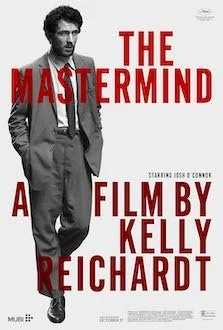
The Mastermind (2025)

Direction: Kelly Reichardt
Country: USA

Directed by the acclaimed Kelly Reichardt (Certain Women, 2016; Showing Up, 2022), whose approach often feels refreshingly removed from convention, The Mastermind is a charming, atmospheric crime thriller infused with subtle humor. Set in Massachusetts in 1970, the story casts Josh O’Connor as an indolent family man turned naive art thief on the run.

Airily layered, the film burns quietly but steadily, exuding a poignant, dark, Robert Altman–esque sensibility. It greatly benefits from Rob Mazurek’s outstanding jazz score—he doubles on piano and trumpet, complemented by tasteful solo drum figures and shimmering cymbal work—and from the gorgeous ’70s texture captured by cinematographer Christopher Blauvelt, who collaborates with Reichardt here for the sixth time. 

The director’s simple, patient, and direct approach once again proves fruitful, resulting in another subtle yet assured film that largely succeeds through the natural, unforced presence of its lead performance.

Simmering without boiling, The Mastermind peels off the surfaces of old-school heist genre, smartly avoiding commonplace, complacency, and demagogy to achieve something truly moody and dusky. While the character's psychology is intriguing, the story and context are subtlety anchored in consistency, rigor, and a deliberate rhythm that catches, almost without words, the sensation of someone who, once lost, seems condemned to the unfathomable pain of permanent solitude. The unforeseeable finale is strikingly ironic in both tone and perspective.

With aesthetics perfectly attuned to its subject, this is another authentic-feeling narrative that further enriches Reichardt’s singular filmography.

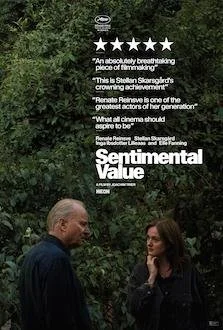
Sentimental Value (2025)

Direction: Joachim Trier
Country: Norway

Danish-Norwegian filmmaker Joachim Trier (Oslo, 31 August, 2011; The Worst Person in the World, 2021) returns with another compelling drama, co-written with his regular collaborator Eskil Vogt. Sentimental Value is a film about paternal estrangement that goes well beyond that premise. It unfolds as an accomplished, Bergman-esque portrait of a family in decline, carrying a particular sensitivity toward film and theater as emotional and narrative frameworks.

Absent for far too many years, renowned filmmaker Gustav Borg (Stellan Skarsgård) inadvertently re-enters the lives of his daughters—Nora (Renate Reinsve) and Agnes (Inga Ibsdotter Lilleaas)—after their mother’s death. Nora, a theater actress, is deeply scarred by a cruel past, living with feelings of abandonment, depression, and insecurity that stem from her parents’ separation. Agnes, married and with a young son, is calmer and far less confrontational. When Nora refuses to take part in Gustav’s new film—written specifically for her—he turns instead to an American actress, Rachel Kemp (Elle Fanning), who struggles to find her footing within the script.

Sentimental Value achieves a rare blend of art and life, where powerful emotions surface within a crystal-clear mise-en-scène. Trier’s direction is marked by confidence and precision, while the actors’ remarkable presence and naturalness anchor the film, shaping complex relationships rich in nuance. This is family drama at its most quietly devastating, sustaining a strong dramatic integrity as its characters grapple with unresolved pain and buried resentment.

The narrative—thoughtfully built through calibrated dialogue—flows with such ease that its underlying complexity can almost go unnoticed. A single gesture often speaks louder than words, with each frame serving to deepen our understanding of the characters. It stands as a touching, mature work of fiction grounded in reality, driven by the invisible bonds that continue to hold us together, even when fractured.

Die My Love (2025)

Direction: Lynne Ramsay
Country: USA 

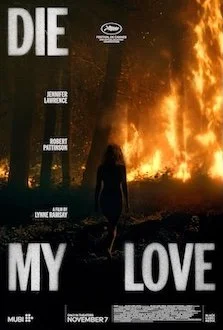
This raw, startlingly honest effort by Scottish filmmaker Lynne Ramsay (Ratcatcher, 1999; We Need to Talk About Kevin, 2011; You Were Never Really Here, 2017) comes charged with fury, following a young mother—superbly portrayed by Jennifer Lawrence—grappling with mental health struggles and postnatal depression. Set in rural Montana, the story unfolds across two time frames, incorporating flashbacks that gradually deepen our understanding of the character’s fragile psychological state.

Die My Love, both painful and exquisite, carries nuance and complexity even in its seemingly blunt title. It is a small yet shattering adult drama that plunges the viewer into a suffocating, harrowing psychosis that appears to offer no clear way out. Based on the 2012 novel of the same name by Argentine writer Ariana Harwicz, the film was co-produced by Martin Scorsese and co-stars Robert Pattinson, Sissy Spacek, and Nick Nolte.

Creatively shot, Die My Love demonstrates keen visual intelligence in service of a compelling narrative that foregrounds boredom, loneliness, and pervasive unhappiness. It leaves you powerless and contemplative, drawing the audience into a state of distress that mirrors that of its characters. The emotional impact is profound, offering a compassionate look at the unexplainable intricacies of life that can suddenly unravel everything. This film also stands as a remarkable showcase for Lawrence, who delivers an unparalleled performance. She and the rest of the cast maintain complete control over the material, while Ramsay never condescends to or sentimentalizes the subject.

Jay Kelly (2025)

Direction: Noah Baumbach
Country: USA

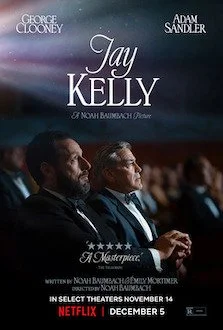
Decidedly petty, Jay Kelly is the new feature by Noah Baumbach, who co-wrote it with Emily Mortimer. This comedy-drama follows a famous yet lonely Hollywood actor (George Clooney) who, accompanied by his loyal manager and longtime friend (Adam Sandler), travels through Europe in an attempt to reconnect with himself. Along the way, he visits his indifferent, often rude father (Stacy Keach) and is forced to confront his strained relationships with his two daughters—the traumatized Jessica (Riley Keough) and the more adventurous Daisy (Grace Edwards). If only the film itself didn’t feel so adrift too…

Jay Kelly is built around a series of glittering but hollow exchanges between characters who always look and act like characters. It never seems to have much that is interesting or new to say. Fragile in conception, the film leans heavily on the strength of its cast, which also includes cameo appearances by Laura Dern, Greta Gerwig, and Jim Broadbent.

There are moments of interest when the characters face their own emptiness and limitations, but these are undercut by several irritating, even ridiculous scenes—the train sequence is a complete wreck—that disrupt the pacing and add a sense of frivolous choppiness. For most of its runtime, this uneven Jay Kelly remains diluted in both tension and emotion, while the humor strains for offbeat quirkiness without ever quite getting there.

The film marks the first collaboration between Sandler and Clooney. While Sandler feels confident and grounded, Clooney tends to overact. Still, it’s within their characters’ relationship that the film becomes minimally tolerable. Everything else falls flat, leaving you simply waiting for it to end.

Springsteen: Deliver me From Nowhere (2025)

Direction: Scott Cooper
Country: USA 

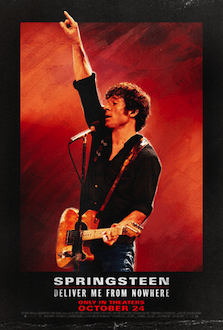
Scott Cooper’s adaptation from the book Deliver Me from Nowhere: The Making of Bruce Springteen's Nebraska by Warren Zanes focuses on a very specific period in Springsteen's life, a depressive phase partly motivated by a complicated relationship with an abusive father and a wobbly, reticent romantic affair. Yet, it was a musically creative one, with the musician risking an unorthodox career move that ultimately paid off.

Jeremy Allen White’s much-anticipated turn as Springsteen raises expectations, but neither he nor Cooper ever quite find a rhythm to build upon. The biopic drifts along passively, leaning heavily on Springsteen’s music while failing to draw any real emotional charge from the material. Conventional in approach and stretched well beyond what its thin narrative can sustain, the film remains trapped in bland, repetitive formulas, never daring to push beyond familiar biopic beats.

Cooper’s pacing is leaden, and the film’s narrow focus further limits its scope, sinking into melancholic passages that rarely rise above banality. Enthusiasm is hard to muster, as the overall experience lacks urgency, momentum, and vitality. Despite the suitably retro-flavored cinematography by Cooper’s regular collaborator Masanobu Takayanagi, Springsteen: Deliver Me from Nowhere remains dramatically inert.

The Running Man (2025)

Direction: Edgar Wright
Country: UK

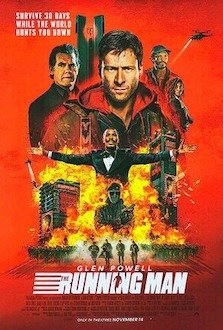
British filmmaker Edgar Wright, who made his name with cult favorites such as Shaun of the Dead (2004), Hot Fuzz (2007), and Baby Driver (2017), returns with The Running Man, an effusive sci-fi action thriller based on Stephen King’s novel and adapted for the screen for a second time, following Paul Michael Glaser’s 1987 version. Glen Powell takes over Schwarzenegger's role in this weakened satire, which plays less like a cautionary dystopia and more like a garish circus broadcast in real time.

Powell stars as Ben Richards, an honest yet volatile man caught in a family crisis, recently fired for insubordination and deeply distrustful of the system and its rules. Desperate, he signs up for the wildly popular TV show The Running Man, a dangerous, often barbaric, technology-manipulated game of survival run by sadistic producer Dan Killian (Josh Brolin).

Although it gestures toward revolution and rebellion, The Running Man never feels grounded or serious, instead pushing forced ideas and piling on far-fetched action sequences. It can be mildly entertaining in spurts, yet it feels as artificial as the fictional program it depicts, constantly echoing better films without forging a strong identity of its own. Don’t let the hype mislead you: this is a slick pretender, driven by formulaic plotting and an aggressive posture, unable to connect its excesses to anything resembling a plausible reality.

Burdened by what feels like heavy post-production interference, the film struggles to find a stable rhythm, repeatedly tripping over its own noisy boom-crash-bang theatrics and a shaky script. Had Wright opted for greater simplicity and fewer preposterous action set pieces, the result might have been a leaner, more coherent spectacle. As it stands, The Running Man is cluttered with loose ends and strained credibility. Check out for yourself and see if you can forgive its flaws.

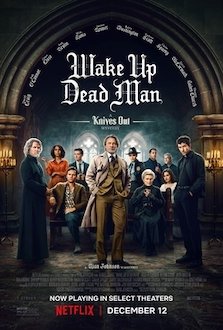
Wake Up Dead Man: A Knives Out Mystery (2025)

Direction: Rian Johnson
Country: UK

Wake Up Dead Man, the third installment of the Knives Out franchise, is a sporadically watchable whodunit assembled without much brilliance. Here you’ll find a tenacious religious cult of personality, heavy confessions, an insoluble murder mystery, ghostly apparitions, and mystical insinuations. Yet the film is not nearly as clever as it believes itself to be. Written, directed, and co-produced by Rian Johnson (Looper, 2012; Star Wars: The Last Jedi, 2017), who also signed the previous two entries (2019 and 2022), it feels increasingly mannered and self-satisfied.

Artificial and predictable, the film is a collage of cheap schemes and contrived plotting revolving around guilt-ridden Father Jud (Josh O’Connor), a former boxer turned Catholic priest assigned to a rural parish in upstate New York. There, Monsignor Jefferson Wicks (Josh Brolin)—a provocateur and opportunist who thrives on a cult of personality—presides over a congregation of fanatical, ambitious followers, whose simmering tensions gradually come to the surface. When a gruesome crime occurs inside the church, only the famed private detective Benoit Blanc (Daniel Craig), operating with his trademark relaxed yet sharply observant demeanor, appears capable of untangling the mystery.

Despite a stellar cast and an abundance of secrets waiting to be unearthed, the story never truly coheres, creeping forward in a disorienting manner that suggests narrative confusion rather than deliberate complexity. The mystery itself proves more bland than intriguing, and by the time the case reaches its conclusion, it feels more undaunting than haunting. Wake Up Dead Man ultimately takes the shape of a hollow parody—a loud, overcooked puzzle that favors spectacle over substance. Sadly, beyond its wackiness, few of its moments are sharp or amusing enough to earn even a fleeting smile.