
Direction: Richard Linklater
Country: USA
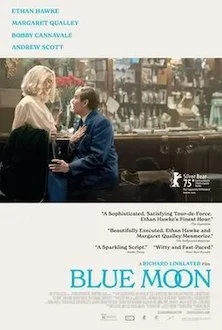
Richard Linklater—who also made the wonderful Nouvelle Vague this year—directs Blue Moon, a strong, impeccably staged biopic about the witty, technically sophisticated lyricist Lorenz Hart, who rose to prominence in the 1930s through his long collaboration with composer Richard Rodgers. Together, they created immortal jazz standards such as “Blue Moon”, “The Lady Is a Tramp”, “Manhattan”, and “My Funny Valentine”. The script by novelist Robert Kaplow—re-teaming with Linklater after Me and Orson Welles (2008)—offers more than enough to give us a precise sense of Hart’s personality and inner struggles.
Shot with controlled, precise camerawork, Blue Moon is beautifully rendered, anchored by powerhouse work from Ethan Hawke, who portrays the alcoholic lyricist with a mix of lively spark, reverence for beauty in all its forms, and deep poignancy. The narrative, set in 1934 New York, unfolds over one painful night at Hart’s favorite bar, capturing the bitterness of having to celebrate the massive success and rave reviews of Oklahoma!—Rodgers’ first Broadway show without him (this time collaborating with Oscar Hammerstein). At the same time, Hart confronts an abyss of despair as he feels used by his twenty-year-old protégé and production-designer-wannabe Elizabeth Weiland (Margaret Qualley).
Blue Moon sifts gently across a jazzy landscape with a heartfelt, sometimes bitter touch. Bursting with Hart’s sharp wit and mordant observations, the dialogue is a delight—inebriating, funny, sarcastic, and engrossing. The film’s visual and atmospheric formality may feel pronounced, but don’t let that deter you: this passionate account darts and hops with bracing energy, offering just enough depth to both warm and break your heart.
Observant in the way only Linklater can be, the film feels strikingly authentic and radiates a contagious pleasure. It is not a conventional biopic, but it’s cleverly attuned to emotional nuance, and that makes all the difference.