The Magic Faraway Tree (2026)

Direction: Ben Gregor
Country: UK / USA

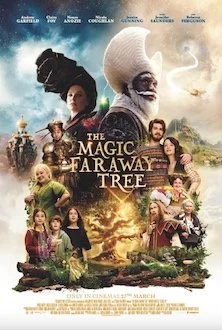
This fantasy adventure film, written by Simon Farnaby and directed by Ben Gregor, is more idiotic than funny. Visually gorgeous yet incredibly boring, it offers an overly childish depiction of pixies, fairies, and other eccentric creatures inhabiting enchanted forests and whimsical lands. As if that weren’t enough, it is burdened by several egregious musical numbers that nearly made me run out of the theater.

Based on The Faraway Tree series by British author Enid Blyton, the film lacks even a stitch of personality. Andrew Garfield (The Amazing Spider-Man, 2012; 99 Homes, 2014) and Claire Foy (First Man, 2018) feel completely adrift, unable to bring conviction or vitality to their underwritten roles. The odds are high that you'll leave the theater disappointed because the larger the scope becomes, the less there is to care about. With such low dramatic stakes, don't be surprised if you find yourself begging for the end much sooner than expected.

The Drama (2026)

Direction: Kristoffer Borgli
Country: USA

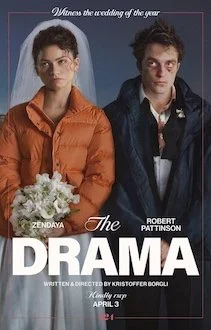
Bold Norwegian writer-director Kristoffer Borgli, who previously generated meaningful emotional friction with films such as Sick of Myself (2022) and Dream Scenario (2023), stumbles heavily in his latest feature, The Drama. The plot follows the happy-turned-turbulent relationship between Emma (Zendaya) and Charlie (Robert Pattinson), which is shaken by a serious revelation. Its block-like, fragmented narrative and forced tension make almost every scene feel fabricated.

The messy script obsesses over judgment, fear, and fixation in increasingly ridiculous ways, while forgiveness and hope—introduced for a bogged-down feel-good finale—feel completely out of place.

The Drama is a humorless, mediocre, and laborious exercise that offers little of genuine interest. Borgli bites off more than he can chew and struggles to digest it. After all, sarcasm alone does not make a film.

Michael (2026)

Direction: Antoine Fuqua
Country: USA

Michael is a bland, tasteless, and stereotypical biopic about American superstar Michael Jackson. Directed by Antoine Fuqua (Training Day, 2001; The Magnificent Seven, 2016) with obvious commercial ambitions, the film focuses on the first half of Jackson’s life—from his difficult childhood in Gary, Indiana, performing alongside his brothers under the supervision of a stern father, to his Motown breakthrough and eventual rise as a solo artist through record-breaking albums such as Off the Wall and Thriller. It also follows his decisive rupture with his opportunistic father.

Michael is not only unexciting and artificial—both musically and emotionally—but also self-congratulatory, choppy, and overly mellow, leaving its subject’s darker chapters and legal controversies safely behind the curtain. The extended musical sequences, recreating several of Jackson’s iconic performances, quickly become excruciatingly overlong. Despite the committed performance of Michael’s nephew, Jaafar Jackson, the film remains a sanitized, dramatically inert portrait that never truly captures the brilliance and contradictions of its subject.

The Great Arch (2025)

Direction: Stéphane Demoustier
Country: France

Inspired by true events that took place between 1983 and 1987, The Great Arch chronicles a pivotal and turbulent chapter in the life of Danish architect Johan Otto von Spreckelsen, compellingly portrayed by Claes Bang (The Square, 2017; The Northman, 2022). At the age of 53, Otto wins a prestigious Paris competition to design an ambitious and innovative structure: an open cube of glass and marble that would eventually become the Grande Arche. Pragmatic and self-assured, he quickly earns the admiration of French president François Mitterrand (Michel Fau), only to find himself ensnared in a web of speculation, bureaucratic obstacles, political maneuvering, and personal agendas fueled by the president’s adviser Subilon (Xavier Dolan). Teaming up with architect-turned-project manager Paul Andreu (Swann Arlaud), Otto faces mounting technical challenges, restrictive regulations, and shifting political realities that continually threaten the project’s completion.

Writer-director Stéphane Demoustier establishes an effective pace, allowing this attentive and highly accessible biographical drama to command our interest through a well-constructed narrative, assured visual storytelling, and strong performances. With a sly, almost mischievous sensibility, he captures the corrosive effects of human frustration while maintaining a firm grasp on the emotional stakes.

The Great Arch is not a film you can devour, but to be gradually devoured by. Never cold, never distant; only unsettling in the honesty with which it portrays governmental indifference and institutional obstruction. There’s something undeniably gripping about this realistic account of a visionary man slowly worn down by forces beyond his control.

Renoir (2026)

Direction: Chie Hayakawa
Country: Japan 

Chie Hayakawa’s sophomore feature, Renoir, is a coming-of-age drama that, struggling to find a consistently satisfying rhythm, timidly engages with supernatural elements. The film follows 11-year-old Fuki (Yui Suzuki), a girl fascinated by psychic powers and hypnosis, haunted by dreams of death, and praised for her exquisite—if sometimes misunderstood—school essays. Her father (Lily Franky) is terminally ill, while her mother (Hikari Ishida) juggles household responsibilities and work while becoming involved in an unexpected affair. Largely unsupervised and rarely expressing her emotions openly, Fuki has ample time to drift into dangerous situations while seeking refuge in the boundless realm of her imagination.

Despite the vivid impressionistic touches, the film attempts to move in too many directions, ultimately becoming trapped in narrative rumination and accomplishing less than it promises. It’s somewhat vaporous in its uneven spell, portraying family dynamics shaped by emotional isolation and detachment. While psychologically intriguing, it lacks the narrative and cinematic momentum necessary to sustain its ambitions. A series of digressions—only intermittently effective—frequently undermines the film’s emotional focus.

Hayakawa, who made a positive debut with Plan 75 (2022), seems constrained by the intimate framework she has created, and Renoir provides few accessible entry points for viewers. I found it hard to establish a meaningful connection with its characters and their experiences.

All That's left Of You (2025)

Direction: Cherien Dabis
Country: Germany / Palestine / other

With a narrative spanning three generations—from 1948 to 2022—All That’s Left of You is a tragic drama with unmistakable political undertones, written and directed by Palestinian-American filmmaker Cherien Dabis, who also stars alongside the late Mohammad Bakri and his son Saleh Bakri.

Anchored by deeply convincing characters, the film portrays not only suffering, boundless sorrow, and resilience in the face of war as a daily reality, but also the difficult choices surrounding sensitive issues such as organ donation.

Through a discreet and unschematic approach to staging, Dabis finds emotional power in the tension between historical narrative and family melodrama, embracing a measured lyricism that never feels forced. The film’s greatest strength lies in its faith in humanity as a healing force, an outlook capable of melting even the most cynical hearts. Its storytelling is direct and assured, naturally intertwining collective history with intimate personal experience.

We are all familiar with the countless ways war dehumanizes individuals. Yet here, Dabis refuses to surrender to that inevitability. She never degrades her characters or fetishizes their suffering, choosing instead to foreground their dignity and capacity for hope. The transmission of trauma may be unavoidable, but compassion remains a vital source of relief. In All That’s left Of You, that compassion resonates long after the final scene.

Mektoub My Love: Canto Due (2026)

Direction: Abdellatif Kechiche
Country: France

On the heels of the polemic, hedonistic Mektoub My Love: Intermezzo (2019)—which included a 13-minute unsimulated oral sex scene—Mektoub, My Love: Canto Due marks the third installment in the trilogy by controversial Tunisian-French director Abdellatif Kechiche (Blue is the Warmest Color, 2013). Despite showing flashes of potential, the film grows increasingly uneven as it progresses, relying heavily on the tension generated by carefully staged situations where ideas abound but meaningful resolution remains elusive. It all leads to an incomplete, unsatisfying finale.

Loosely adapted from the novel La Blessure, la vraie by François Bégaudeau, the story follows Amin (Shaïn Boumedine), a shy young man who returns to Sète after abandoning his medical studies in Paris. Aspiring to become a screenwriter and filmmaker, he finds an unexpected opportunity when celebrated yet emotionally vulnerable American actress Jessica Patterson (Jessica Pennington) arrives in town with her producer husband, Jack (Andre Jacobs). Running parallel to this narrative is the predicament of his best friend Ophélie (Ophélie Bau), who works on her parents’ farm and is preparing to marry her fiancé while secretly planning an abortion in Paris after becoming pregnant with her lover’s child.

Every shot breathes disenchantment, generating more friction through the raw immediacy of its images than through the narrative itself, which often feels slight and inconsequential. Excessively unconcerned with pursuing a coherent dramatic trajectory and overly dependent on the performances of its cast, the film occasionally brushes against genuine emotional truth only to let it dissipate in the following scene. There are moments that are both ludicrous and shocking, along with bursts of heightened emotion in a drama that swells to irrational proportions without offering much illumination.

Co-written by Kechiche and his partner, screenwriter-editor Ghalya Lacroix, Mektoub My Love: Canto Due is not unwatchable—merely trivial.

The Richest Woman in the World (2025)

Direction: Thierry Klifa
Country: France

French director and co-writer Thierry Klifa loosely based his film on the scandal surrounding billionaire heiress Liliane Bettencourt, which involved payments to photographer François-Marie Banier and several French government figures.

Isabelle Huppert embodies the heiress under the name Marianne Farrère. Bored with life, she decides to “live” a little more after meeting the vulgar, inconvenient, and arrogant photographer Pierre-Alain Fantin (Laurent Lafitte). Driven by greed and eccentricity, Fantin attempts to turn Marianne against her politician husband, Guy (André Marcon)—a closeted gay man—and their daughter Frédérique (Marina Foïs). The story is loosely narrated by Jérôme Bonjean (Raphaël Personnaz), Marianne’s caring, observant butler.

Enthusiastically oscillating between comedy and drama, The Richest Woman in the World—whose greatest achievement is perhaps living up to its brazen title—grapples with excesses in both plot and duration, provoking nervous laughter and occasional drowsiness without leaving a major impression. However, despite lacking truly effective plot twists, it is meticulously crafted, becoming venomous in the way it portrays a crumbling bourgeoisie. The story, whose details can certainly be admired, is at times frustrating to absorb, yet it carries an undeniable kernel of truth.

Family disruption, obsessive fascination, vile manipulation, and overwhelming lavishness are key elements in this French tragicomedy in the vein of Claude Chabrol, Molière, and Émile Zola. The unstable, operatic marriage of cheeky satire and melodrama would not have worked had the virtuoso duo of Huppert and Lafitte—notably co-stars in Elle (2016) by Paul Verhoeven—not been so committed. Somewhat superficial, Klifa’s film is a ravishing yet emotionally unmoving experience.

The Christophers (2026)

Direction: Steven Soderbergh
Country: UK

The Christophers marks the return of Steven Soderbergh, who, through a deceptively simple form, ultimately captivates and moves the viewer with this art-centered story brimming with humanity. The script, by regular collaborator Ed Solomon (they previously joined forces on No Sudden Move and two miniseries), follows Lori Butler (Michaela Coel), an art restorer with a penetrating gaze who agrees to forge the valuable unfinished work of aging pop artist Julian Skar (Ian McKellen) at the request of his money-grubbing children, Sallie (Jessica Gunning) and Barnaby (James Corden). Julian, conversational and long inactive, welcomes the restrained Lori as his assistant. Unexpectedly, honesty begins to shape their special relationship, derailing the original scheme.

Partly inspired by Peter Yates’ The Dresser (1983), Soderbergh returns to his roots by embracing a stripped-down narrative in which understated humor naturally emerges through the dialogue. Both destructive and redemptive, the film replaces imitation with inspiration, leaving the audience oddly appreciative of the friendship and artistry born from an intended forgery.

The Christophers is polished with a subtle indie sensibility, its pacing effective and its storytelling rich with ideas and art-related discussion points. It is especially elevated by McKellen’s towering performance and Coel’s self-assured coolness. What initially seems destined to descend into darkness suddenly turns luminous — and shines. A hugely likable dark comedy-drama about artists at opposite ends of the spectrum.

Rose of Nevada (2026)

Direction: Mark Jenkin
Country: UK

From Mark Jenkin, the British director who positively puzzled us with the non-linear narratives of Bait (2019) and Enys Man (2022), Rose of Nevada takes us to a devastated fishing village where a rusty local boat reappears mysteriously in the harbor after has been given as lost at sea for 30 years. Its old crew has vanished, but the new one: local Nick (George MacKay) and newcomer Liam (Callum Turner) are ready to join a seasoned old skipper (Francis Magee). When they return ashore, they realize that a shift in time has occurred. Curiously and unfathomably, Nick loses his family while Liam gains a new one. 

The imagery, in conjoint with the editing, is at once deeply unsettling and visually hypnotic. The frames are constantly infused with textures, patterns, and geometries, evoking a strange connection between past and present as well as between ghostly dreams and a harsh reality. If you’re looking for humor, you won’t find it here. Actually, Jenkin opts for the square format to amplify the story’s sense of suffocation and disorientation, plunging viewers into an oppressive and anxiety-inducing atmosphere from which they will not emerge unscathed.

Distinctively unnerving, Rose of Nevada is pure ritualistic spectacle, a mental exercise with a truly beautiful effect. It’s a psychological, highly atmospheric ghostly tale that, never becoming macabre, is as enigmatic and surprising as it is engrossing, confirming its author as one of the best things that happened to recent British cinema.

Enzo (2026)

Direction: Robin Campillo
Country: Italy

Written by the late Laurent Cantet—known for The Class (2008) and Human Resources (1999)—and directed by his friend Robin Campillo, Enzo is a raw, powerful coming-of-age drama centered on a 16-year-old boy who needs desperately to find his place in the world and understand where he really belongs. He reaches a phase in his life where he tries to undecipher and adapt the best he can to a world of elusion. Immaculately portrayed by non-professional actor Eloy Pohu, Enzo, not without deep anguish and dramatic actions, gradually reveals more about his true self. 

The film, co-produced by Jacques Audiard and the Dardenne brothers, compellingly expresses when the intimate clashes with the social environment that surrounds you in this lucid, simmering tale that, despising closure, prefers to embrace openness instead. Precise yet delicate both in terms of script and acting, Enzo is original in content, far from the usual clichés, while its beauty lies in the simplicity and objectivity of its filmmaking.

Crossing their visions and filmmaking styles, Cantet and Campillo turn adolescent desire and family tension into a ferociously raw journey, succeeding in creating a visceral, sensitive, and jarring portrait of a teenager in crisis.

Diamonds (2026)

Direction: Ferzan Ozpetek
Country: Italy

I was never an admirer of Italian director Ferzan Ozpetek’s style, and after watching his latest feminist comedy Diamonds, even less so. Formulaic, cheesy, and unexciting on every front, Diamonds explores the behind-the-scenes world of cinema in a soap-opera-like fashion that feels both predictable and uninspired. Ozpetek reportedly drew inspiration from his early experiences as an assistant director, yet the result rarely transcends cliché.

The plot, co-written with Elisa Casseri and Carlotta Corradi, follows a respected filmmaker (played by Ozpetek himself) who reunites his favorite actresses to make a film about women, set in the 1970s. At the center are the stern, emotionally guarded Alberta (Luisa Ranieri) and her perpetually grief-stricken sister Gabriella (Jasmine Trinca), founders of a Roman costume workshop serving the film industry. Around them orbit a group of female employees, each burdened with personal struggles.

There is little that feels authentic in this glossy misfire. The film collapses into trite melodrama, mawkish sentimentality, and an almost aggressively superficial treatment of its themes. Ozpetek’s heavy-handed direction, combined with exaggerated performances and relentlessly saccharine music, turns the experience into an exhausting exercise in emotional manipulation. The abrupt swings between comedy and tragedy come across as forced rather than affecting, making Diamonds—despite its surprising box-office success in Italy—a frustrating waste of time. I believe in the power of women, but not in the cinematic power of a misguided film like this. 

The History of Sound (2025)

Direction: Oliver Hermanus
Country: USA

South African helmer Oliver Hermanus, best known for the dramas Beauty (2011) and Living (2022), returns with The History of Sound, a bittersweet love story between two men bound by their passion for folk music in early 20th-century America. Based on two short stories by screenwriter Ben Shattuck, the film unfolds in sepia hues and dusky textures, yet takes too long to develop, ultimately struggling to find the emotional perspective and dramatic momentum necessary to fully engage.

The story follows Lionel Worthing (Paul Mescal), who leaves his family farm in Kentucky to pursue his dream of becoming a folk singer. At the New England Conservatory in Boston, he meets David White (Josh O'Connor), whose passion lies in collecting folk songs from rural communities. The two are involuntarily separated by World War I, reconnecting in Maine two years later, only to drift apart once more after a year of unanswered letters.

While the narrative remains frustratingly superficial—technically polished yet dramatically inert, most of the film feels trapped in repetition, particularly during the musical interludes, which tend to weaken rather than deepen the emotional current. Hermanus’ direction is elegant and controlled, but also strangely hollow, leaving key emotional threads to dissolve into the surrounding fog. Hermanus and Shattuck clearly approach the material with sincerity, yet the result rarely cuts deeply. Likewise, despite the undeniable talent of Mescal and O’Connor, neither is given the opportunity to deliver truly memorable work here. It’s a disappointing outcome.

My Father's Shadow (2026)

Direction: Akinola Davies Jr.
Country: Nigeria / UK

My Father’s Shadow is a semi-autobiographical drama set over the course of a single day in Lagos, Nigeria, during the 1993 election crisis. Debut filmmaker Akinola Davies Jr., who co-wrote the script with his brother Wale, shoots the film on 35mm, lending the story a tactile emotional richness. The narrative follows brothers Akin (Godwin Chiemerie Egbo) and Remi (Chibuike Marvellous Egbo), aged eight and eleven, who leave their rural home to spend a day in Lagos with their often-absent father, Folarin (Sope Dirisu). Desperately attempting to recover unpaid wages from the factory where he works, Folarin navigates a city simmering with tension while gradually opening up to his sons, answering difficult questions and easing some of their unspoken pain.

My Father’s Shadow functions simultaneously as an abrasive political statement and an impressionistic childhood memory. Told largely through the perspective of the children, the film unfolds like an urban road movie punctuated by meaningful encounters, balancing discovery with melancholy in a graceful and deeply humane way. At its core, it becomes a quiet declaration of love—for both family and country.

Filmed with great empathy, the work is as visually captivating as it is emotionally resonant. The crisp editing and striking cinematography immerse the viewer in a warm yet bittersweet experience. Davies brings tenderness to an otherwise painful story, firmly establishing a distinctive cinematic voice in the process. Avoiding easy dramatic shortcuts, My Father’s Shadow builds its emotional power through subtle gestures and the poignant contrast between childhood innocence and the harsh political reality surrounding it.

A sublime first film for Davies, winner of a BAFTA and recipient of a special mention in Cannes’ Camera D’Or section.

After the Hunt (2025)

Direction: Luca Guadagnino
Country: USA

Italian helmer Luca Guadagnino, who caused surprise with Call Me By Your Name (2017) but has recently disappointed with films like Challengers (2024) and Queer (2024), stumbles again with After the Hunt, a psychological thriller weighed down by dramatic excess, intellectually convoluted dialogue, and an overreliance on ambiguity.

Relying on close-ups that fail to bring intimacy, and a depth of field that reinforces emotional detachment, the film wallows in both dark morass and bitter coldness. Julia Roberts stars as a polished philosophy professor at Yale, while Ayo Edebiri plays an ambitious and privileged student who accuses one of the university’s assistant professors—portrayed by Andrew Garfield—of sexual assault.

The picture, struggling to create a true identity of its own, feels hollow as many of the narrative suggestions are tucked away in sub-contexts. Coldness reigns, revelations abound, confidences are shared, and tempers flare in After the Hunt. Sadly, the film continually drifts into inconsequential detours, ultimately failing to deliver the impact it strives for. Despite a solid performance from Roberts, Guadagnino’s thriller remains frustratingly inert, and I struggled with it up until the end.

The President's Cake (2026)

Direction: Hasan Hadi
Country: Iraq 

Humor, hardship, constant quarrels, and quiet sorrow shape The President’s Cake, a drama of remarkable sensitivity written and directed by debut filmmaker Hasan Hadi. Set in Saddam Hussein’s Iraq, the film follows nine-year-old Lamia (Baneen Ahmad Nayyef), who never parts with her beloved rooster, after she is assigned the daunting task of baking a cake for the president’s birthday celebration at school. To accomplish this, she must travel in search of scarce and costly ingredients across a country ravaged by food shortages, inflation, and poverty. Closely accompanying her is her loyal friend Saeed (Sajad Mohamad Qasem), a young pickpocket.

The story draws from Hadi’s own childhood memories of school life under the regime, capturing both the cruelty of authoritarian rule and the resilience and vitality of children confronted with adversity. Filmed on location in Iraq with an impressive sense of composition and visual authenticity, the film is elevated by the outstanding performances of its non-professional cast, whose natural presence recalls the realism and emotional delicacy of Abbas Kiarostami’s cinema.

Heartbreaking yet poetic, The President’s Cake unfolds as a perceptive and elegantly crafted fable, enriched by refined imagery and a bittersweet emotional tone. Its Caméra d’Or win at the Cannes Film Festival feels entirely deserved.

Wasteman (2026)

Direction: Cal McMau
Country: UK

Wastman tells the story of Taylor (David Jonsson), a prison cook who has spent 13 years behind bars and is finally granted the possibility of parole, provided he maintains good behavior and participates in a rehabilitation program. Having recently reconnected with his estranged 14-year-old son for the first time in years, Taylor longs for a fresh start. Yet the arrival of Dee (Tom Blyth), an ambitious and ferocious new inmate, complicates everything. Taylor initially helps him, only to become entangled in Dee’s ruthless pursuit of power within the prison hierarchy.

This ferocious and often punishing British prison drama avoids shallow misanthropy while immersing itself in a world steeped in violence and drugs. The shifting power dynamics and mounting psychological tension create a viscous, menacing atmosphere that clings to the screen—stifling, sweaty, and grimy. In his feature debut, director Cal McMau plunges the viewer into the brutal mindset of prison life, presenting it as an exercise in abandoned humanity.

What ultimately elevates Wasteman above many similarly themed dramas is the strength of its performances. Jonsson and Blyth bring a volatile emotional intensity that keeps the film gripping even in its bleakest moments. Infused with just enough unpredictability, the film sustains attention from beginning to end, refusing to let the viewer look away.

The Stranger (2026)

Direction: François Ozon
Country: France

François Ozon’s The Stranger is nothing short of a masterpiece. Based on Albert Camus’ celebrated novel, the film stars Benjamin Voisin—delivering a staggering, chilling performance—as Meursault, a taciturn young Frenchman living in 1930s Algeria, seemingly indifferent to everything around him. Quiet and emotionally detached, Meursault remains consistently honest yet appears unmoved at his mother’s funeral, agrees halfheartedly to marry his recent acquaintance Marie (Rebecca Marder), and spends time with his dubious neighbor Raymond (Pierre Lottin). Most unsettling of all, he shows no remorse after unjustifiably killing an Arab man, admitting that he feels only ennui rather than regret.

Acted and directed with near-flawless precision, The Stranger marks Ozon’s second black-and-white feature after Frantz (2016). Hovering between arthouse cinema and neo-noir, the film conjures a morbid interplay of light and shadow reminiscent of classic French New Wave works. The editing establishes a graceful, measured rhythm, while the impeccable cinematography by Belgian director of photography Manuel Dacosse, coupled with the film’s tightly controlled tension, creates a formidable sense of time and place.

Provocative and engrossing from beginning to end, this is unsentimental adult filmmaking at its finest. A psychological thriller stripped of conventional thrills, it immerses the viewer in a deeply unsettling moral puzzle. The more one reflects on it, the more its cold existential unease lingers. One could scarcely hope for a better adaptation of Camus’ text—faithful in spirit and devastating in execution.

The Disappearance of Josef Mengele (2026)

Direction: Kirill Serebrennikov
Country: Germany / France / other

Russian filmmaker Kirill Serebrennikov (The Student, 2016; Petrov’s Flu, 2021) turns his gaze to Josef Mengele—the Auschwitz doctor infamously known as “The Angel of Death”—in his latest historical drama The Disappearance of Josef Mengele. Based on Olivier Guez’s non-fiction novel, the film traces Mengele’s later years as he evades capture under false identities in Buenos Aires, Paraguay, and Brazil. Magnificently embodied by August Diehl, the fugitive doctor receives a clandestine visit from his son, Rolf (), yet remains unrepentant, clinging to his ideological convictions until the end.

This is a deeply disturbing work that seeks not compassion but clarity, with Serebrennikov adopting an oppressive visual language shaped by extended takes, stark black-and-white imagery, tense legato scoring, and disorienting shifts in time and space. Departing from his usual formal lyricism, the director presents a remorseless figure haunted by the specters of his past with simmering intensity. At times chaotic—particularly in the inclusion of 8mm color sequences depicting the atrocities committed by Mengele and his collaborators—the film nonetheless reveals a cold, austere beauty in its portrayal of physical decay, mental deterioration, and ultimate isolation.

Though it might benefit from a tighter runtime, The Disappearance of Josef Mengele—sometimes unbearable, sometimes virtuosic—leaves a powerful, disorienting impression.

U Are the Universe (2025)

Direction: Pavlo Ostrikov
Country: Ukraine / Belgium

U Are the Universe is a minimalist, low-budget Ukrainian space odyssey with unusual tonal shifts and much to admire. Written and directed by Pavlo Ostrikov, the film stars Volodymyr Kravchuk as a solitary, hot-tempered, and a bit self-centered astronaut tasked with transporting nuclear waste to Jupiter’s abandoned moon, Callisto. When Earth suddenly explodes, he accepts his fate as the last human in the universe—until a radio message from a female meteorologist stationed near Saturn suggests otherwise.

The film signals a fresh and exciting entry in European sci-fi cinema, drawing the viewer into its survivalist premise with steady, absorbing momentum. It remains consistently mesmerizing, sustained by Ostrikov’s thoughtful direction. Both the set design and special effects are impressively realized, while occasional touches of deliberately cheesy music enhance the film’s offbeat humor—particularly in the evolving, love-hate dynamic between the astronaut and Max, his devoted onboard computer.

Caught between the certainty of death and the emergence of a love he has never known, the protagonist undergoes a form of spiritual awakening that transcends mere survival instinct. The film is constructed with meticulous care, generating a palpable sense of uncertainty, wonder, and emotional depth.

Loneliness stands at the core of the narrative, and U Are the Universe explores it with striking effectiveness—blending humor, tenderness, suspense, and claustrophobia with substance. By the time the credits roll, its impact is undeniable—a small but remarkable gem that leaves a lasting impression.