

Magellan (2026)

Direction: Lav Diaz
Country: Philippines / Portugal / other

Meticulously directed by Filipino filmmaker Lav Diaz (From What is Before, 2014; The Woman Who Left, 2016) and co-produced by Albert Serra, Magellan is an idiosyncratic, pseudo-epic historical film portraying the Portuguese explorer Ferdinand Magellan. It reenacts his attempts to conquer and convert the spice lands to Christianity—notably Malacca in Malaysia (under the orders of King Manuel I of Portugal) and later the island of Cebu in the Philippines (in service of the Spanish crown)—in the 16th century. Magellan, compellingly embodied by Mexican actor Gael Garcia Bernal (Amores Perros, 2000; The Motorcycle Diaries, 2004; No, 2012), faces markedly different outcomes in these expeditions, the latter undertaken after leaving his pregnant wife Beatriz (Angela Azevedo) behind in Portugal.

Patiently narrated and beautifully photographed, the film makes extensive use of static shots that at times extend beyond necessity, juxtaposing the beauty of the landscape with the odiousness of human actions. It unfolds as an uneven, slow-burning saga of two hours and forty minutes, yet remains rich in historical detail and atmosphere, sustained by a hypnotic mise-en-scène in which the protagonist’s intransigence and creeping madness are keenly felt.

Lushly lensed and intensely cerebral, Magellan is both haunting and frustrating, quietly unsettling in its poetic and political power.

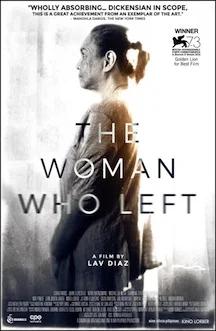
The Woman Who Left (2017)

woman-who-left-movie.jpg

Directed by Lav Diaz
Country: Philippines

Filipino drama “The Woman Who Left” is no easy watching, requiring redoubled concentration and considerable amounts of patience from the viewers to be fully absorbed. Reinforcing his statute of cult director, Lav Diaz (“Norte, The End of History”, “From What is Before”) was awarded with the Venice Golden Lion with this peculiar, classic-style revenge tale, vanquishing other powerful candidates such as “La La Land”, “Jackie”, “Nocturnal Animals”, or “Arrival”.

Diaz drew inspiration from Leo Tolstoy’s short story "God Sees the Truth, But Waits” and not only adapted it to the Filipino reality but extended it to three hours and forty-six minutes. Nothing to be surprised, since he always showed this tendency for protracted movies - “Norte” runs a bit more than four hours, while “From What is Before” goes over five and a half hours!

If pondered-style indie world cinema is right up your alley, you won't give your time as wasted as you contemplate this somber story.

Charo Santos-Concio is Horacia Somorostro, a good-hearted teacher who spent 30 years in a Filipino correctional for a crime she didn’t commit. In 1997, her longtime friend Petra finally confessed she was the culprit of a murder machinated by Horacia’s ex-boyfriend, the wealthy Rodrigo Trinidad (Michael de Mesa). 

Before going after Rodrigo with a clear intention to kill, Horacia stops by her family’s house, but only finds the daughter of the old caretaker who informs her about the death of her husband, the sudden disappearance of her son, and the whereabouts of her daughter, Minerva (Marjorie Lorico), who never went to visit her in prison.

woman-who-left-pic.jpg

Acting undercover, Horacia moves to the city where Rodrigo lives, planning carefully all the steps of a very anticipated bloody retaliation. However, the new stranger in town reveals true compassion for the poor and the disadvantaged, befriending Magbabalot (Nonie Buencamino), a miserable yet God-devotee egg street seller, Mameng (Jean Judith Javier), an unbalanced young woman who knows exactly who the ‘devils’ are, and Hollanda (John Lloyd Cruz), an epileptic transvestite who roams the streets with self-contempt, waiting patiently for his life to end. In the most despairing situation, all these characters will take something from her but will also reciprocate. 

The painful loneliness is increased by a sparse narrative, while the lingering camera, capturing everything in a Kurosawa-esque black-and-white praxis, turns this film into an occasionally exasperating but ultimately rewarding experience. The surprises of the story don't come from where you expect, and that is an extra point for Diaz’ written material.

Simultaneously bleak and illuminated, “The Woman Who Left” is not just about revenge, moral integrity, and opportunity. It’s about life… a life you didn’t choose to live but you are compelled to. Furthermore, it makes a keen observation on the recent situation of the Philippines, a country dominated by injustice and social inequality. The good thing is that Diaz, not satisfied with merely denouncing it, combats it with love, clemency, and friendship.

3meio.jpeg
