Direction: Richard Linklater
Country: France / USA
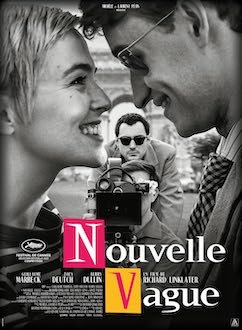
Acclaimed American filmmaker Richard Linklater (Boyhood; the Before trilogy) ventures into unexpected territory: reconstructing a pivotal moment in film history—the birth of Jean-Luc Godard’s Breathless (1960), and, with it, the rise of the French New Wave and its legends. More interested in the mechanics and behind-the-scenes processes than in traditional drama, Linklater reimagines the past in crisp black-and-white, delivering a wildly entertaining throwback to the ’60s.
Guillaume Marbeck’s radiant performance as Godard—revolutionary, anarchic, unorthodox, and perpetually dismissive of convention—is nothing short of flawless. Zoey Deutch, in her second collaboration with Linklater after Everybody Wants Some!, brings vivid presence to Jean Seberg, while Aubry Dullin channels the charisma and ease of Jean-Paul Belmondo. Together, they infuse the film with a youthful, infectious vitality that makes Nouvelle Vague pulse with energy.
Beautiful, stylish, and memorable, the film captures the joy, urgency, and constant negotiation that define the filmmaking process. Linklater balances complex elements with sharp dialogue and stellar performances, all framed by deftly angled compositions that reflect the unpredictable currents of Godard’s personality—an unconventional filmmaker perched on the cusp of stardom.
Nouvelle Vague arrives as a triumphant recreation of a defining cinematic moment. Steeped in realism and fueled by a palpable love for cinema, it often feels like an exercise in cinephile time travel. And although a few characters drift in without clear purpose, Linklater widens the frame, painting a dazzling portrait of a generation that revolutionized cinema.

Quisque iaculis facilisis lacinia. Mauris euismod pellentesque tellus sit amet mollis.