
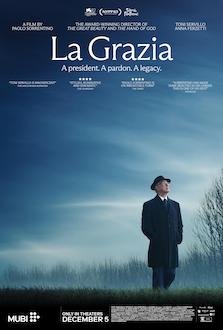
Direction: Paolo Sorrentino
Country: Italy
In the spectacular La Grazia, Paolo Sorrentino stages an Italian president confronting moral dilemmas—two presidential pardons and a bill on euthanasia—six months before the end of his term. The aging head of state, magnificently portrayed by the inimitable Toni Servillo, longs for his late, unfaithful wife, raps in his spare time, and reflects on how he will exercise his powers.
Never adverse to political themes, Sorrentino makes a triumphant return with a reflective, ironic, and witty political comedy brimming with value and spirit. Director and actor collaborate here for the seventh time, adding another title to memorable works such as The Great Beauty (2013), Il Divo (2008), and The Consequences of Love (2004).
Rather than indulging in cynicism, Sorrentino’s artistry reveals a genuine zest for life. While examining power and influence, the film also underscores the importance of truth. It unfolds with both grace and gravity, its offbeat supporting characters enhanced by a powerful mise-en-scène and a sublime fusion of classical tones with a vibrant contemporary sensibility.
Openly flirting with comedy to probe authority and doubt, La Grazia once again places Sorrentino among the foremost international directors. Stylish and intoxicating, the film approaches politics—dirty or otherwise—with unusual entertainment value. Servillo commands the screen with authority, crafting a character far more compelling than most real-life politicians. Though entirely a product of the director’s imagination, the president inevitably recalls Italy’s current head of state, Sergio Mattarella, while certain artistic inspirations echo Krzysztof Kieślowski’s late-1980s miniseries Dekalog.



Quisque iaculis facilisis lacinia. Mauris euismod pellentesque tellus sit amet mollis.