
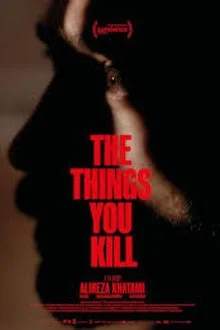
Direction: Alireza Khatami
Country: Turkey
The Things You Kill, the third feature from Iranian-Canadian filmmaker Alireza Khatami (Terrestrial Verses, 2023), is a Lynchian misfire. Semi-autobiographical in nature, the film follows Ali (Ekin Koç), a college English professor grappling with fertility issues, who returns to Turkey after several years in the US. Back home, he is confronted with deeply ingrained patriarchy, ongoing family disputes, government corruption, and a series of invisible wounds rooted in shameful, inherited behavioral patterns. Everything shifts after his mother dies under suspicious circumstances, prompting Ali to hire a new gardener, Reza (Erkan Kolçak Köstendil), an enigmatic wanderer from the North with whom he enters an obscure and unsettling pact.
At first, the film sustains a slow-burning tension, working as a measured psychological character study with a clear sense of purpose. However, the surreal second half—a hall-of-mirrors pact that probes darker impulses, exposing cruelty, vengeance, and simmering resentment—possesses an enigmatic allure, though one that feels more decorative than illuminating. Like a Picasso painting, it invites interpretation without necessarily deepening emotional engagement.
The performances are solid, and Khatami deliberately sidesteps several conventions of the crime thriller. Still, everything feels a bit jarring and soulless throughout. It is a thinly veiled, downbeat tale that, despite its complex narrative construction, still delivers a fairly straightforward message. The austere tone and chilly portrayal of grief and obsession are intellectually intriguing but rarely visceral. Spiraling and twisting without arriving at anything truly revelatory, The Things You Kill won’t make you sweat—its surreal dimension adding too little substance to justify its ambitions.



Quisque iaculis facilisis lacinia. Mauris euismod pellentesque tellus sit amet mollis.