
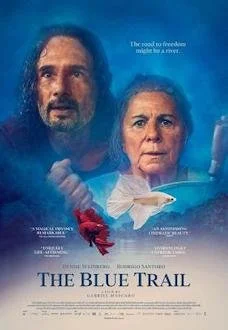
The Blue Trail (2026)

Direction: Gabriel Mascaro
Country: Brazil

Brazilian director Gabriel Mascaro’s fourth feature, The Blue Trail, is a dystopian boat drama that, marked by a bittersweet tone while refusing to abandon hope, explores themes of ageism, authoritarianism, and resilience. In truth, it unfolds like an absurdist fable, questioning not only one’s relationship with old age but also totalitarian governmental programs driven by greedy economic intentions, to the detriment of a proper consideration for seniors’ feelings.

Upon reaching the age of 77, Tereza (Denise Weinberg) faces forced relocation—to a Colony from which no one returns—yet embarks on a clandestine, almost surreal journey along the Amazon River to embrace freedom and fulfill her dream of flying.

We encounter passive-aggressive undertones while following this woman’s path with curiosity, and the film delivers with disarming subtlety in the right moments. Yet, the script, co-written by Mascaro and Tibério Azul, works only intermittently, at times languishing in feverish psychedelia and heavy-handed gravitas. The Blue Trail could have been a scarier and more intoxicating trip, but it ultimately stands as an ode to brave resistance, dignity, and self-respect.

Divine Love (2021)

divine-love-movie-2021.jpg

Direction: Gabriel Mascaro
Country: Brazil

Brazilian director Gabriel Mascaro deserved all the attention he got with his raw feature debut, Neon Bull (2015). Now, he returns with Divine Love, shifting his observant gaze from the Northeastern Brazilian rodeo to a sort of meditation on the limits of faith set in a near future.

The year is 2027 and the story, told by the voice of a child, focuses on Joana (Dira Paes), a devotee of Jesus Christ who works in the divorce department of a renewed Brazilian state, whose most important event is now the Party of Supreme Love instead of the Carnival. She and her infertile husband, Danilo (Julio Machado), are members of the support religious group Divine Love, which helps divorcing couples reconcile through prayers, rituals and partner swapping. Their motto is “Love doesn’t betray. Love shares.”

Joana is very happy with her work but lives dissatisfied with the impossibility of having a child. With the help of a Pastor (Emílio de Mello) who works in a public drive-through, and strengthened with her tremendous faith, Joana doesn’t lose hope. Actually, miracles can happen, but they have a consequence here. 

The give and take is well patented within a film that is at once straightforward and cynical. Maybe, the story spends too much time preaching, but Mascaro holds tight to his credo, aiming at the Brazilian conservatism with irony. Even with the two leads playing a perfect fiddle to one another, one finds some unnecessary repetition. Moreover, the fact that one is able to get the point soon before the film’s ending hampers Divine Love from stepping up. It's a tolerable effort, though, from a filmmaker with potentiality.

3.jpg