
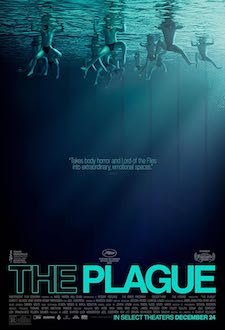
The Plague (2026)

Direction: Charlie Polinger
Country: USA

The Plague, a psychological horror drama centered on a youth water polo team, marks a convincing debut for writer-director Charlie Polinger, who received accolades in the Un Certain Regard section at the 2025 Cannes Film Festival. Delving into a neurotic pre-adolescence steeped in anxiety, the film draws from the director’s personal diaries written during a summer camp in 2003.

As an astute—if at times dreary—examination of youth culture within a sports camp setting, the film confronts uncomfortable realities such as bullying and the challenges of integrating into a new group. It is also notably atmospheric, ambiguous, and faintly bizarre, with a darkness that probes into grim, rarely explored emotional corners.

Polinger avoids sensationalism, maintaining a restrained, low-key approach, while the ensemble cast delivers strong performances. Young actors Everett Blunck and Kayo Martin are particularly remarkable, and a composed Joel Edgerton also contributes both on screen and as a co-producer. 

It’s a strange movie—one that may initially feel elusive in its appeal, yet gradually reveals its intrigue through lingering enigmas. A bolder ending might have elevated it further, but The Plague, carrying an unexpected emotional weight, emerges as a pleasant surprise.

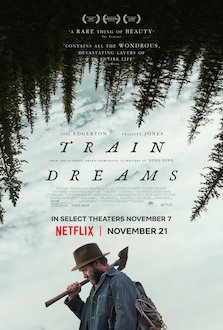
Train Dreams (2025)

Direction: Clint Bentley
Country: USA

Co-written and directed by Clint Benton (Sing Sing, 2023), Train Dreams adapts Denis Johnson’s 2011 novella of the same name. Set in the early 20th century, it follows Robert Grainier (Joel Edgerton), a humble, hard-working lumberjack employed by a railway company that operates around Bonners Ferry, Idaho. He lives a largely solitary existence until he meets and marries Gladys Olding (Felicity Jones), with whom he has a daughter. Struggling financially, Grainier is forced to spend longer stretches working in the forests, and his prolonged absences from home grow increasingly painful. Yet nothing compares to the sudden tragedy that ultimately reshapes his life.

Influenced by the dreamy tones and minimalist aesthetic of Terrence Malick, Benton crafts a cruel, elegiac, and melancholic tone poem about life, loss, grief, and the inexorable passage of time. Will Patton’s voice-over narration gently guides us through a harsh landscape of hope and disillusionment. The intimacy and sorrow are quietly transfixing, and despite its unhurried pace, Train Dreams emerges as a deeply moving piece of filmmaking. It is elevated by polished, evocative visuals (shot by Adolpho Veloso), a bittersweet script that also reflects a racially divided America yearning for progress, and a soundtrack that convincingly transports us to another era.

Carrying the sweep of an epic drama without overreaching, Train Dreams stands as a heartfelt tribute to honest, hard-working men in search of solace and inner peace.

Master Gardener (2023)

Direction: Paul Schrader
Country: USA

In recent years, American filmmaker Paul Schrader has been dedicated to portraying lonely men paying for sins of the past, who are ironically presented with a chance of forgiveness and redemption. It happened with the nearly masterpiece First Reformed (2017) and the just tolerable The Card Counter (2021). Fitting seamlessly into this group, Master Gardener is the weakest of the three as it goes from a promisingly obscure opening to a decrease of solutions that turn it uninteresting and clumsy.

Joel Edgerton is Narvel Roth, an accomplished gardener with a violent past of racial hate and crime. He was "rescued" by and works for the wealthy Mrs. Haverhill (Sigourney Weaver), with whom he maintains a casual affair. When the latter asks him to take her estranged, mixed-blood 20-year-old grandniece, Maya (Quintessa Swindell), as an apprentice, Narvel’s peaceful life changes drastically. Their age gap is not an obstacle for them to falling in love, and that comes with a price. 

Despite the authentic rotgut flavor, the film has a one-take feel about it, being buried in a clunky framework that, not dancing with originality, rarely cracked me up. The frustrating Master Gardener brings a message of inclusivity and redemption but forgets the thrills, never going far beyond the basic set-up. To add fuel to the fire, the acting couldn’t be more stiff and the gardening descriptions, with all their obvious allegories, more tedious. The silly conclusion only confirms the miswriting of Schrader, whom we definitely prefer cynical and bolder. Better luck next time!