
Rebuilding (2025)

Direction: Max Walker-Silverman
Country: USA

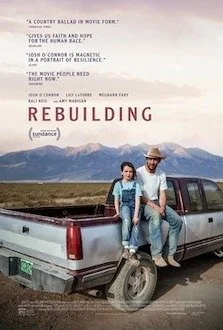
Rebuilding is a melancholy, heartbreaking neo-western drama marked by deliberate pacing and a hopeful, emotionally resonant conclusion. Simple, sincere, and deeply human, it follows Dusty (Josh O’Connor), a divorced cowboy and father who loses his family ranch to a devastating wildfire in southern Colorado. Temporarily living in a trailer community at a government-run campsite with other dispossessed landowners, Dusty finds support in his neighbors and in his ex-wife Ruby (Meghann Fahy). His once busy days suddenly become heavy with anguish and inertia.

Some films take their time laying out the story and settling over the audience. This is one of them. Yet, thanks to Max Walker-Silverman’s focused and sensitive direction, as well as the impressive naturalness of the gifted and much sought-after Josh O’Connor—who recently stood out in Kelly Reichardt’s The Mastermind—the result is an emotionally charged account that never feels manipulative, transcending the sappier trappings of the genre. There is plenty of aching nuance, but the film remains generous and entirely legible in its sorrow.

This complexity of feeling, paired with formal sumptuousness, translates into deeply ingrained sadness but also genuine uplift as events shift toward cautious hope and new opportunity. Capturing more than just lavish backdrops and romantic sentimentality, Rebuilding is a tolerant, poetic, and realistic work that earns its place in contemporary American cinema.

The Mastermind (2025)

Direction: Kelly Reichardt
Country: USA

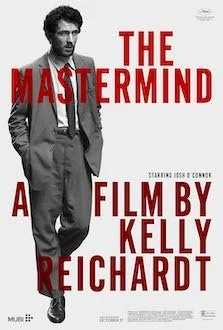
Directed by the acclaimed Kelly Reichardt (Certain Women, 2016; Showing Up, 2022), whose approach often feels refreshingly removed from convention, The Mastermind is a charming, atmospheric crime thriller infused with subtle humor. Set in Massachusetts in 1970, the story casts Josh O’Connor as an indolent family man turned naive art thief on the run.

Airily layered, the film burns quietly but steadily, exuding a poignant, dark, Robert Altman–esque sensibility. It greatly benefits from Rob Mazurek’s outstanding jazz score—he doubles on piano and trumpet, complemented by tasteful solo drum figures and shimmering cymbal work—and from the gorgeous ’70s texture captured by cinematographer Christopher Blauvelt, who collaborates with Reichardt here for the sixth time. 

The director’s simple, patient, and direct approach once again proves fruitful, resulting in another subtle yet assured film that largely succeeds through the natural, unforced presence of its lead performance.

Simmering without boiling, The Mastermind peels off the surfaces of old-school heist genre, smartly avoiding commonplace, complacency, and demagogy to achieve something truly moody and dusky. While the character's psychology is intriguing, the story and context are subtlety anchored in consistency, rigor, and a deliberate rhythm that catches, almost without words, the sensation of someone who, once lost, seems condemned to the unfathomable pain of permanent solitude. The unforeseeable finale is strikingly ironic in both tone and perspective.

With aesthetics perfectly attuned to its subject, this is another authentic-feeling narrative that further enriches Reichardt’s singular filmography.

Wake Up Dead Man: A Knives Out Mystery (2025)

Direction: Rian Johnson
Country: UK

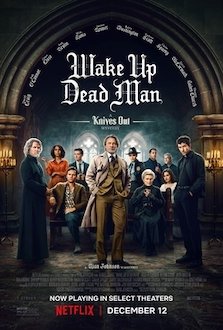
Wake Up Dead Man, the third installment of the Knives Out franchise, is a sporadically watchable whodunit assembled without much brilliance. Here you’ll find a tenacious religious cult of personality, heavy confessions, an insoluble murder mystery, ghostly apparitions, and mystical insinuations. Yet the film is not nearly as clever as it believes itself to be. Written, directed, and co-produced by Rian Johnson (Looper, 2012; Star Wars: The Last Jedi, 2017), who also signed the previous two entries (2019 and 2022), it feels increasingly mannered and self-satisfied.

Artificial and predictable, the film is a collage of cheap schemes and contrived plotting revolving around guilt-ridden Father Jud (Josh O’Connor), a former boxer turned Catholic priest assigned to a rural parish in upstate New York. There, Monsignor Jefferson Wicks (Josh Brolin)—a provocateur and opportunist who thrives on a cult of personality—presides over a congregation of fanatical, ambitious followers, whose simmering tensions gradually come to the surface. When a gruesome crime occurs inside the church, only the famed private detective Benoit Blanc (Daniel Craig), operating with his trademark relaxed yet sharply observant demeanor, appears capable of untangling the mystery.

Despite a stellar cast and an abundance of secrets waiting to be unearthed, the story never truly coheres, creeping forward in a disorienting manner that suggests narrative confusion rather than deliberate complexity. The mystery itself proves more bland than intriguing, and by the time the case reaches its conclusion, it feels more undaunting than haunting. Wake Up Dead Man ultimately takes the shape of a hollow parody—a loud, overcooked puzzle that favors spectacle over substance. Sadly, beyond its wackiness, few of its moments are sharp or amusing enough to earn even a fleeting smile.