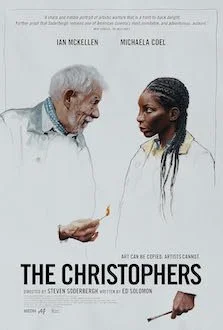

The Christophers (2026)

Direction: Steven Soderbergh
Country: UK

The Christophers marks the return of Steven Soderbergh, who, through a deceptively simple form, ultimately captivates and moves the viewer with this art-centered story brimming with humanity. The script, by regular collaborator Ed Solomon (they previously joined forces on No Sudden Move and two miniseries), follows Lori Butler (Michaela Coel), an art restorer with a penetrating gaze who agrees to forge the valuable unfinished work of aging pop artist Julian Skar (Ian McKellen) at the request of his money-grubbing children, Sallie (Jessica Gunning) and Barnaby (James Corden). Julian, conversational and long inactive, welcomes the restrained Lori as his assistant. Unexpectedly, honesty begins to shape their special relationship, derailing the original scheme.

Partly inspired by Peter Yates’ The Dresser (1983), Soderbergh returns to his roots by embracing a stripped-down narrative in which understated humor naturally emerges through the dialogue. Both destructive and redemptive, the film replaces imitation with inspiration, leaving the audience oddly appreciative of the friendship and artistry born from an intended forgery.

The Christophers is polished with a subtle indie sensibility, its pacing effective and its storytelling rich with ideas and art-related discussion points. It is especially elevated by McKellen’s towering performance and Coel’s self-assured coolness. What initially seems destined to descend into darkness suddenly turns luminous — and shines. A hugely likable dark comedy-drama about artists at opposite ends of the spectrum.

Rose of Nevada (2026)

Direction: Mark Jenkin
Country: UK

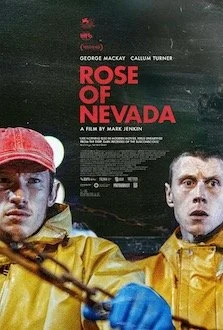
From Mark Jenkin, the British director who positively puzzled us with the non-linear narratives of Bait (2019) and Enys Man (2022), Rose of Nevada takes us to a devastated fishing village where a rusty local boat reappears mysteriously in the harbor after has been given as lost at sea for 30 years. Its old crew has vanished, but the new one: local Nick (George MacKay) and newcomer Liam (Callum Turner) are ready to join a seasoned old skipper (Francis Magee). When they return ashore, they realize that a shift in time has occurred. Curiously and unfathomably, Nick loses his family while Liam gains a new one. 

The imagery, in conjoint with the editing, is at once deeply unsettling and visually hypnotic. The frames are constantly infused with textures, patterns, and geometries, evoking a strange connection between past and present as well as between ghostly dreams and a harsh reality. If you’re looking for humor, you won’t find it here. Actually, Jenkin opts for the square format to amplify the story’s sense of suffocation and disorientation, plunging viewers into an oppressive and anxiety-inducing atmosphere from which they will not emerge unscathed.

Distinctively unnerving, Rose of Nevada is pure ritualistic spectacle, a mental exercise with a truly beautiful effect. It’s a psychological, highly atmospheric ghostly tale that, never becoming macabre, is as enigmatic and surprising as it is engrossing, confirming its author as one of the best things that happened to recent British cinema.

Wasteman (2026)

Direction: Cal McMau
Country: UK

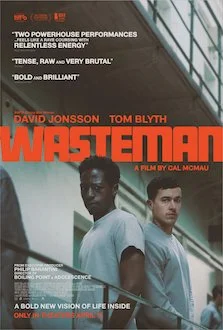
Wastman tells the story of Taylor (David Jonsson), a prison cook who has spent 13 years behind bars and is finally granted the possibility of parole, provided he maintains good behavior and participates in a rehabilitation program. Having recently reconnected with his estranged 14-year-old son for the first time in years, Taylor longs for a fresh start. Yet the arrival of Dee (Tom Blyth), an ambitious and ferocious new inmate, complicates everything. Taylor initially helps him, only to become entangled in Dee’s ruthless pursuit of power within the prison hierarchy.

This ferocious and often punishing British prison drama avoids shallow misanthropy while immersing itself in a world steeped in violence and drugs. The shifting power dynamics and mounting psychological tension create a viscous, menacing atmosphere that clings to the screen—stifling, sweaty, and grimy. In his feature debut, director Cal McMau plunges the viewer into the brutal mindset of prison life, presenting it as an exercise in abandoned humanity.

What ultimately elevates Wasteman above many similarly themed dramas is the strength of its performances. Jonsson and Blyth bring a volatile emotional intensity that keeps the film gripping even in its bleakest moments. Infused with just enough unpredictability, the film sustains attention from beginning to end, refusing to let the viewer look away.

The Testament of Ann Lee (2026)

Direction: Mona Festvold
Country: UK / USA

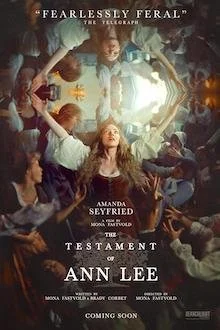
From Norwegian filmmaker Mona Festvold (The Sleepwalker, 2014; The World to Come, 2020), The Testament of Ann Lee explores the life of the leader and founder of the Shakers, an 18th-century British religious sect, through frenzied songs and dances that attempt to capture the feverish worship of its believers. Ominously introduced through music and movement—set to a score by The Brutalist composer Daniel Blumberg—the film gradually loses momentum, becoming painfully dragging. 

Despite its decent premise, this exploitative mystery leaves much to be desired, with Fastvold knowing exactly where to put the camera but losing control over how long to let it roll. The result is a repetitive execution that struggles to evoke genuine chills, no matter how insistently it tries.

Completely missing the mark on the emotional side, The Testament of Ann Lee ultimately fails to resonate—I neither enjoyed it nor found it to offer anything particularly meaningful. It feels like a film more interested in exhibiting pain than in understanding it, weighed down by extended musical sequences that stall an already unsatisfying narrative. One might even call it an ambitious misfire, lost within its own artistic formula.

I Swear (2025)

Direction: Kirk Jones
Country: UK

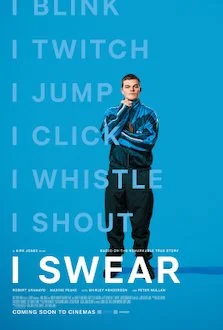
I Swear depicts the true story of John Davidson, a Scottish man first diagnosed with Tourette syndrome—a condition that can cause involuntary swearing, spitting, and gestural tics—at the age of 12. Written and directed by Kirk Jones (Waking Ned Devine, 1998; Everybody’s Fine, 2009), the film follows Davidson’s path from his difficult teenage years into adulthood, when he decides to help others living with this exhausting and often misunderstood neurological disorder.

Sometimes hilarious, sometimes sad—but always with a big heart—I Swear is a noble and worthwhile effort that still struggles with a somewhat heavy-handed script. This mildly likable drama, occasionally frustrating yet equally rewarding, feels more educational and encouraging than truly exciting as a viewing experience. English actor Robert Aramayo immerses himself so completely in the role that his performance feels refreshingly unforced. He is the soul of a film that informs while also managing to please audiences.

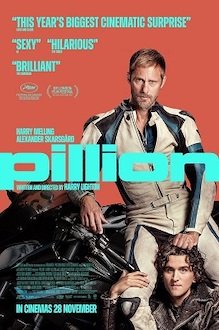
Pillion (2026)

Direction: Harry Lighton
Country: UK / Ireland 

Harry Lighton’s confident feature debut, Pillion, adapts Adam Mars-Jones’s 2020 novel Box Hill, telling the story of an introverted, openly gay man (Harry Melling) who becomes the submissive companion of a seductive biker (Alexander Skarsgård), who turns him into a servant and sexual object. He accepts this role willingly until, one day, everything shifts. Lighton also draws inspiration from Kenneth Anger’s experimental short film Scorpio Rising (1963).

Relatively simple in concept but complex in detail, Pillion portrays an atypical relationship in which brutality and tenderness coexist. It is a well-written, carefully constructed, shape-shifting work guided by powerful, pitch-perfect performances from Melling and Skarsgård, both of whom excel in the face of demanding material.

Evocatively transgressive and unexpected, the convincing scenes accumulate emotional impact. Some elements are intentionally left unspoken, requiring the viewer to read between the lines of the characters’ behavior. This is neither a conventional crowd-pleaser nor a traditional romance, but something more unusual and less familiar. Lighton’s approach replaces sentimentality with mordancy, while razor-sharp wit appears in measured, well-timed doses. It makes a striking dramatic statement, boldly peculiar in nature, much like its characters.

Although not for everyone, Pillion is determined to be candid, boundary-pushing, and entertaining, weaving a carefully balanced dynamic that is controlled by neither character.

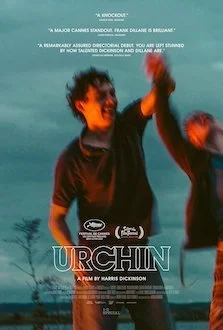
Urchin (2025)

Direction: Harris Dickinson
Country: UK

Urchin, a pungent and desolate drama written and directed by debutant Harris Dickinson, confronts the trauma of abandonment, homelessness, and the brutal cycles of addiction and relapse with a realistic, sensitive touch. Unpolished by design and deliberately loose in structure, this compelling tale offers a painfully accurate portrait of addiction and failed rehabilitation. It rings true largely thanks to a fearless performance by Frank Dillane, who makes it unmistakably clear that surviving as a homeless junkie is an exhausting, corrosive existence. He carries the film on his back with gritty conviction, anchoring a work that may be rough around the edges but remains intoxicating absorbing.

Dillane plays Michael Wiltshire, a volatile drug abuser drifting through Dalston, East London, who violently assaults a man trying to help him. Following his release from jail, Michael is offered second chances and encounters new people who briefly suggest the possibility of change. But whether he can find happiness, stability, or even a sense of purpose remains painfully uncertain. What makes the character so unsettling is how Michael appears paradoxically both in love with and repelled by his own impulses and self-destructive behavior.

Urchin avoids the trappings of dour social realism, yet it does not flinch from exposing the devastating toll drugs take on individuals and those around them. Merciless and unsettling, it is a tightly focused indie drama perfectly scaled to the towering performance at its center. Dickinson announces himself as a filmmaker worth watching, and Dillane confirms a formidable talent whose future work deserves close attention.

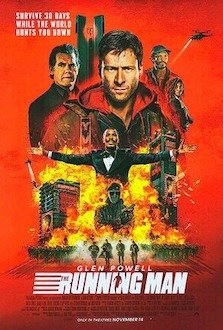
The Running Man (2025)

Direction: Edgar Wright
Country: UK

British filmmaker Edgar Wright, who made his name with cult favorites such as Shaun of the Dead (2004), Hot Fuzz (2007), and Baby Driver (2017), returns with The Running Man, an effusive sci-fi action thriller based on Stephen King’s novel and adapted for the screen for a second time, following Paul Michael Glaser’s 1987 version. Glen Powell takes over Schwarzenegger's role in this weakened satire, which plays less like a cautionary dystopia and more like a garish circus broadcast in real time.

Powell stars as Ben Richards, an honest yet volatile man caught in a family crisis, recently fired for insubordination and deeply distrustful of the system and its rules. Desperate, he signs up for the wildly popular TV show The Running Man, a dangerous, often barbaric, technology-manipulated game of survival run by sadistic producer Dan Killian (Josh Brolin).

Although it gestures toward revolution and rebellion, The Running Man never feels grounded or serious, instead pushing forced ideas and piling on far-fetched action sequences. It can be mildly entertaining in spurts, yet it feels as artificial as the fictional program it depicts, constantly echoing better films without forging a strong identity of its own. Don’t let the hype mislead you: this is a slick pretender, driven by formulaic plotting and an aggressive posture, unable to connect its excesses to anything resembling a plausible reality.

Burdened by what feels like heavy post-production interference, the film struggles to find a stable rhythm, repeatedly tripping over its own noisy boom-crash-bang theatrics and a shaky script. Had Wright opted for greater simplicity and fewer preposterous action set pieces, the result might have been a leaner, more coherent spectacle. As it stands, The Running Man is cluttered with loose ends and strained credibility. Check out for yourself and see if you can forgive its flaws.

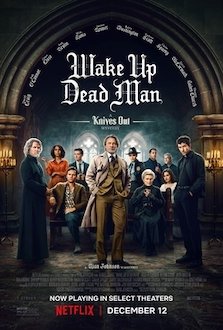
Wake Up Dead Man: A Knives Out Mystery (2025)

Direction: Rian Johnson
Country: UK

Wake Up Dead Man, the third installment of the Knives Out franchise, is a sporadically watchable whodunit assembled without much brilliance. Here you’ll find a tenacious religious cult of personality, heavy confessions, an insoluble murder mystery, ghostly apparitions, and mystical insinuations. Yet the film is not nearly as clever as it believes itself to be. Written, directed, and co-produced by Rian Johnson (Looper, 2012; Star Wars: The Last Jedi, 2017), who also signed the previous two entries (2019 and 2022), it feels increasingly mannered and self-satisfied.

Artificial and predictable, the film is a collage of cheap schemes and contrived plotting revolving around guilt-ridden Father Jud (Josh O’Connor), a former boxer turned Catholic priest assigned to a rural parish in upstate New York. There, Monsignor Jefferson Wicks (Josh Brolin)—a provocateur and opportunist who thrives on a cult of personality—presides over a congregation of fanatical, ambitious followers, whose simmering tensions gradually come to the surface. When a gruesome crime occurs inside the church, only the famed private detective Benoit Blanc (Daniel Craig), operating with his trademark relaxed yet sharply observant demeanor, appears capable of untangling the mystery.

Despite a stellar cast and an abundance of secrets waiting to be unearthed, the story never truly coheres, creeping forward in a disorienting manner that suggests narrative confusion rather than deliberate complexity. The mystery itself proves more bland than intriguing, and by the time the case reaches its conclusion, it feels more undaunting than haunting. Wake Up Dead Man ultimately takes the shape of a hollow parody—a loud, overcooked puzzle that favors spectacle over substance. Sadly, beyond its wackiness, few of its moments are sharp or amusing enough to earn even a fleeting smile.

The Summer Book (2025)

Direction: Charlie McDowell
Country: UK / USA / Finland

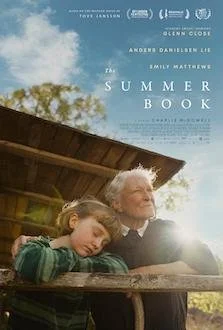
Directed by Charlie McDowell (The One I Love, 2014; Windfall, 2022), written by Robert Jones, and starring and co-produced by Glenn Close (Fatal Attraction, 1987; Dangerous Liaisons, 1988), The Summer Book is a bland adaptation of Tove Jansson’s 1972 novel of the same name. It follows a grandmother (Close) and her six-year-old granddaughter, Sophia (Emily Matthews), as they spend the summer on a small island in the Gulf of Finland. The young girl and her emotionally distant father (Anders Danielsen Lie), a busy yet lonely illustrator, are still grieving the loss of her mother and his wife, respectively.

Emotional fragility and occasional boredom affect Sophia, while her grandmother—deeply connected to nature—shows signs of memory lapses. The Summer Book is a sweet, tender tale, but its development feels sluggish and its resolution predictable. The film lacks gravity, lingering too long on minute details and subdued gestures that make it feel humble yet monotonous. Rania Hani’s somnolent score does little to invigorate the pacing, which often borders on lethargic.

There are lessons to be learned here, but it takes more than a leading star and gentle plotting to make a film truly resonate. Not to mention that the scenery has more definition than the characters. Slight at its core, The Summer Book remains stubbornly stalled between sincere intentions and a weary torpor.

Hallow Road (2025)

Direction: Babak Anvari
Country: UK

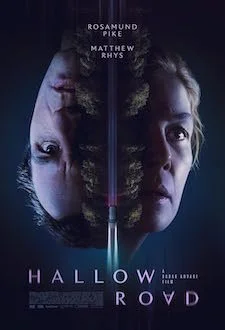
British-Iranian director Babak Anvari proves himself a master of economy in his fourth feature, Hallow Road, an intense, low-budget parent-child psychological nightmare stripped down to just two actors: Rosamund Pike and Matthew Rhys. The pair sustain the film admirably, delivering committed if occasionally repetitive performances.

Written by William Gillies, the script follows a married couple—troubled paramedic Maddie (Pike) and overprotective father Frank (Rhys)—who receive a distressed late-night call from their 18-year-old daughter claiming she has crashed her car on a deserted woodland road. Both parents fight to maintain control, but fear and paranoia quickly take hold when they discover the road is steeped in sinister myth and lore.

Hallow Road is taut and spare, sustaining a hypnotic sense of unease that favors suggestion over revelation. Anvari builds suspense with precision, weaving a psychological trance that relies less on shocks than on atmosphere and dread. Yet, while the film gets the job done on its own terms, it lacks the spark that might have elevated it further. The ambiguous finale leaves your mind spinning more than your gut churning, as hope flickers desperately within the shadows of the woods.

Unicorns (2025)

Direction: James Krishna Floyd, Sally El Hosaini
Country: UK

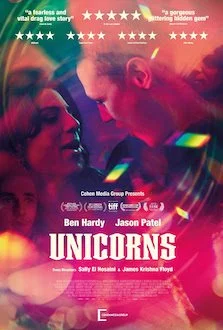
Ben Hardy and Jason Patel star in Unicorns, a British queer drama directed by James Krishna Floyd— who also penned the script—and Sally El Hosaini (The Swimmers, 2022). The story revolves around the serendipitous relationship between Luke (Hardy), a single father from Essex who works as a mechanic, and Aysha (Patel), a drag queen striving for artistic recognition.

The film presents a respectful and sincere narrative, told with honesty and restraint, though it takes a quieter approach than one might expect—even when going to unsettling places. It’s a cross-cultural love story marked by rivalry, cruelty, and prejudice, elevated by empathetic and grounded performances from its leads.

Straddling the line between kitschy flair and indie sensibility, the filmmakers inject the familiar premise with insight and intimacy. Most notably, the film avoids becoming overly sentimental or obnoxiously cautionary. Not particularly groundbreaking, Unicorns takes an eventful route to a predictable destination. It’s a plot you can see coming once the main characters are in place.

28 Years Later (2025)

Direction: Danny Boyle
Country: UK 

If you’re into post-apocalyptic chaos, then 28 Years Later may be a visceral treat for you. Director Danny Boyle (Trainspotting, 1996; 28 Days Later, 2002; Slumdog Millionaire, 2008) and screenwriter Alex Garland (Ex-Machina, 2014; Civil War, 2024) reunite for the conclusion of a trilogy—and the launch of a new one. Several sequences were shot on the iPhone 15 Pro Max, with Anthony Dod Mantle’s stunning cinematography playing a crucial role in the film’s visual magnetism.

A community of survivors has taken refuge on a small island, accessible to the mainland only via a treacherous road. Twelve-year-old Spike (Alfie Williams) ventures to the mainland for the first time with his father, Jamie (Aaron Taylor-Johnson), to learn how to kill the infected and survive on his own. Along the way, he discovers the existence of Dr. Kelson (Ralph Fiennes), the only person who may be able to save his ailing mother (Jodie Comer).

Delivered with breathless pacing and indomitable energy, 28 Years Later veers from rage to reflection without ever slipping into monotony. The infected fade into the background, with the story focusing more intently on the emotional complexities of family and the fragile relationships among the uninfected. This made me want to go along unquestioningly. Vicious yet full of heart and humanity, the film ultimately becomes a celebration of life.

Boyle approaches the material with offbeat flair, making this installment tonally distinct from its predecessors. If you’re going to revisit a dusty premise, you’d better be inventive—and both Boyle and Garland rise to the challenge. The result is a bloody, wildly entertaining odyssey brimming with risks and perils. Nia DaCosta (Little Woods, 2018; Candyman, 2021) is set to direct 28 Years Later: The Bone Temple, scheduled for release in January 2026.

Hard Truths (2025)

Direction: Mike Leigh
Country: UK

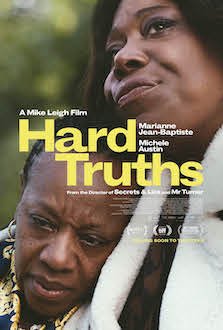
Written and directed by the great Mike Leigh (Naked, 1993; Vera Drake, 2004), Hard Truths is an acrid contemporary drama that explores depression and bitterness within an African-American family in England. Marked by the pragmatic, unflinching realism that defines much of Leigh’s work, the film centers on Pansy Deacon (Marianne Jean-Baptiste), an unsympathetic, deeply unhappy woman whose life is weighed down by trauma, extreme control, antagonism, and emotional isolation. Lonely, exhausted, and fearful, she makes life unbearable for her hardworking husband, Curtley (David Webber), and their indolent 22-year-old son, Moses (Tuwaine Barrett). The only person who can tolerate Pansy’s abrasive nature is her sister, Chantelle (Michele Austin).

Reuniting with Jean-Baptiste 28 years after Secrets & Lies—Leigh’s Palme d’Or-winning drama—the director presents a toxic home environment with no easy resolution. It’s an intense, at times overwhelming experience, more humiliating than humorous, and grappling with Leigh’s recurring theme: the sheer difficulty of living. Emotional suffocation, unrelenting tension, and pervasive sadness dominate the atmosphere, yet if ever a performance could redeem such bleakness, it is Jean-Baptiste’s.

At times, while carrying his love-it-or-hate-it penchant for directness, Leigh risks alienating the audience from his intent. However, he ensures that every emotional wound is laid bare with sharp clarity, granting his actors the freedom to improvise in a way that heightens the film’s authenticity. The good part is that he’s not afraid to show the ugliest moments of life, doing it without passing judgment.

Bird (2024)

Direction: Andrea Arnold
Country: UK 

Bird—a strange, captivating, and sensory coming-of-age drama—marks an extraordinary return for Andrea Arnold, one of the most brilliant independent filmmakers of our time. Known for her raw, direct, and original filmmaking style, Arnold’s work occasionally leans heavily on handheld camera techniques, which may polarize some viewers, but here they deliver stunning results. Her approach thrives in crafting complex environments filled with genuine, idiosyncratic characters.

The film follows a 12-year-old girl, played by the astonishing Nykiya Adams, who delivers a breakout performance as the young protagonist navigating life in a struggling neighborhood in Kent, Southeast England. Bird is not only a testament to Arnold’s command of storytelling but also a deeply satisfying emotional journey. It surprises with its quality and rewards the trust it asks of its audience, presenting a distinct aesthetic that marks another bold step in Arnold’s celebrated career rooted in social realism. This time, however, Arnold enriches the narrative with touches of fantasy that intrigue and captivate. 

The instincts are primitive and euphoric but the humanity is radiant and comforting, infused with a surprising sweetness in moments where harshness might have been expected. If Arnold’s aim was to push buttons and make us feel the environment and the emotions surrounding the protagonist, she's succeeded wildly. Her high-flying fable and observant social chronicle never loses track of its characters and their humanity. Even in its hauntingly poetic and minimalist surrealist interludes, Bird soars with both primal urgency and a tender heart, transcending the hardships it portrays.

Confirmed as an accomplished director of great gifts and passions, Arnold makes the most of her incredible cast of non-professional actors - the exceptions are Barry Keoghan (The Killing of a Sacred Deer, 2017; Dunkirk, 2017; The Banshees of Inisherin, 2022) and Franz Rogowski (Transit, 2018; Great Freedom, 2021; Passages, 2023), who add depth and nuance to the ensemble. The film’s diligent pacing, electrifying British post-punk soundtrack, and dynamic camera work amplify the protagonist’s sense of anxiety and disorientation, making Bird a visceral, radiant, and highly rewarding experience.

Blitz (2024)

Direction: Steve McQueen
Country: UK / USA

British filmmaker Steve McQueen, celebrated for his unflinching dramas like Hunger (2008), Shame (2011), and the Oscar-winning 12 Years a Slave (2013), returns with Blitz, a wobbly wartime drama that tackles themes of racism, loss, and survival. Written by McQueen, this fictional story anchored in a brutal historical reality, is set during WWII in London, a city under relentless bombing by German forces. The protagonist is George (Elliott Heffernan), a mixed-race boy sent to the countryside by his mother Rita (Saoirse Ronan), in a desperate effort to keep him safe amidst the chaos.

McQueen's direction is distinguished by formal rigor and precise realism, but his film is less impactful than usual. Although effectively capturing the horrors of war and the anguish of separation, the film’s not completely free of academicism, its success hampered by an uneven intensity. It’s too manufactured for my taste, with a few scenes depicted in an excessively casual way to ring true. 

Despite a neat visual aesthetic marked by glossy frames of war destruction, the film gets lost in the multiplicity of its ambitions and tangled in conventional triteness and sentimentality. Blitz feels weighed down by its own limitations. In general, it doesn't transcend, and viewers may feel a little icky about the experience. 

Conclave (2024)

Direction: Edward Berger
Country: UK / USA

From Andrew Berger, the German director behind the multi-award-winning anti-war epic All Quiet on the Western Front (2022), Andrew Berger, comes the more subdued Conclave. This religion-themed thriller, penned by Peter Straughan and based on Robert Harris’ 2016 novel, delves into the shadowy world of Vatican politics. Ralph Fiennes takes the lead as Cardinal-Dean Thomas Lawrence, a man grappling with a personal crisis of faith while tasked with overseeing the papal conclave following the pope's sudden death.

As the slow and ritualistic process of selecting the new leader of the Catholic Church unfolds, Lawrence encounters a web of secrets, conspiracies, prejudice, and ambition. Among the candidates vying for the position, one figure stands out: Vincent Benitez (Carlos Diehz), a little-known Mexican archbishop stationed in Kabul, whose presence stirs unease and curiosity among the cardinals.

Cocooned in gravitas and profound doubt, Conclave thrives on the nuanced performances of its  seasoned cast. Fiennes, for example, not only chews the scenery but savors it, as he expresses deep concern about the future of the church with Stanley Tucci and Isabella Rossellini offering strong supporting turns. 

Although not particularly groundbreaking in its clash of modernity and tradition within the Church, the film at least never commits the deadliest sin in cinema: boredom, providing enough good material to keep its iniquitous fires burning. Yet, this gun-free thriller—effectively blending faith, tradition, and politics—could have been even more gripping if infused with more scandal, intrigue, and mystery. Ultimately, your enjoyment of Conclave may depend on your perspective on its themes.

The Outrun (2024)

Direction: Nora Fingscheidt
Country: UK / Germany 

Set against the breathtaking landscapes of Scotland’s Orkney Islands, The Outrun marks German director Nora Fingscheidt’s third feature, an adaptation of Amy Liptrot’s best-selling memoir. The film follows the harrowing journey of Rona (Saoirse Ronan), a 29-year-old unemployed alcoholic who, after her chaotic life in urban London spirals out of control, voluntarily attends AA meetings and returns to her childhood home. Amid the rugged beauty of the islands, Rona confronts her past, shaped by a religious mother and a bipolar father, as she struggles to rebuild her life. 

Ronan, also serving as a producer, delivers a mesmerizing performance, infusing Rona with raw emotion and vulnerability. Known for her acclaimed roles in Lady Bird (2017) and Brooklyn (2015), she once again proves herself a powerhouse, capturing the turbulence of addiction and recovery with profound authenticity. Her portrayal mirrors the unpredictable Orkney weather: serene one moment, tumultuous the next.

Fingscheidt employs a non-linear narrative, weaving flashbacks with present-day scenes to explore Rona’s internal and external battles. The lyrical voice-over enhances the storytelling, offering glimpses into the protagonist’s thoughts and reflections. While the final scene slightly falters in execution, the film’s overall tone and rhythm remain consistently engaging, immersing the viewer in Rona’s world of constant struggle and fleeting victories.

At its core, The Outrun is a potent neo-realist drama—compassionate, intimate, and unflinchingly honest. Its unadorned approach, paired with Ronan’s deeply affecting performance, makes it a compelling exploration of addiction, redemption, and the healing power of returning to one’s roots.

The Zone of Interest (2023)

Direction: Jonathan Glazer
Country: UK / other

In The Zone of Interest, British filmmaker Jonathan Glazer, known for Birth (2004) and Under the Skin (2013), delivers his finest film to date, a loose adaptation of Martin Amis' novel that rightfully earns the accolade of Best International Feature Film at the Oscars. This visually arresting and original work centers around the diligent Auschwitz commandant Rudolf Hoss (Christian Friedel) and his wife, Hedwig (Sandra Hüller), who reside in their idyllic dream house adjacent to the concentration camp. Shot on location, predominantly with natural light, the film masterfully juxtaposes the serene family life of the couple with the harrowing reality of genocidal atrocities occurring just beyond their property fence.

The characters’ examination is done patiently and incisively within a narrative that doesn’t rely on explicitness to convey its message. The film’s opening scenes are evocative of Jean Renoir’s bucolic A Day in Country, only to swiftly confront the audience with a different reality: the banality of evil. This is done with such a discretion it becomes creepy. There’s family and well-founded dreams on one side, and then selfishness, privilege, and indifference on the other.

Polish cinematographer Lukasz Zal, who previously worked with Pawel Pawlikowski in Ida (2013) and Cold War (2018), contributes to the film’s visual allure with exquisite compositional finesse and meticulous attention to detail. His framing effectively captures the narrative's haunting atmosphere, punctuated by dreamy sequences in negative black and white that offer glimpses of compassion amidst the darkness. Despite these brief moments, it’s all very disturbing and fiercely unsentimental. 

The Zone of Interest isn't your high-octane WWII thriller, emerging instead as a spellbinding and unsettling meditation on personal dreams and silent crimes. It’s a powerful and memorable affair that, offering a different perspective of the Holocaust, may feel oppressive despite the absence of explicit violence. Benefitting from impressive performances by the pair of German actors, Glazer portrays this drama with the dazzling smoothness of a movie-making natural.

All of Us Strangers (2023)

Direction: Andrew Haigh
Country: UK

In Andrew Haigh’s latest psychological and supernatural drama, All of Us Strangers, we follow the journey of Adam (Andre Scott), a homosexual screenwriter in his forties who gets in touch with his feelings after starting a relationship with a mysterious neighbor, Harry (Paul Mescal). As their connection deepens, Adam inexplicably finds himself connecting with their late parents (Jamie Bell and Claire Foy), who tragically passed away in a car accident when he was 12. Partially filmed in the house where Haigh grew up on the outskirts of Croydon, the film, based on Taichi Yamada’s 1987 novel Strangers, carries a personal touch that adds depth to the narrative. The inclusion of a 1980s soundtrack further enhances the nostalgic atmosphere.

This beautifully understated and unique film transitions from the mundane to the otherworldly with feverish quietness, offering a poignant exploration of solitude, trauma, grief, love, and the vagaries of time. It’s a well-constructed and nuanced drama that drips with bold visual aplomb and a subtle mysticism akin to disorienting, dreamlike states.

Haigh confirms the immense filmmaking capabilities and storytelling expertise previously showcased in films such as Weekend (2011) and 45 Years (2015). All of Us Strangers lingers in the mind long after the credits roll. It haunts you, and you’ll admire its conception while searching for answers. While the film may not provide easy resolutions, its ambivalent nature and mysterious allure make for a captivating viewing experience. Indeed, it stands as something special in contemporary cinema.