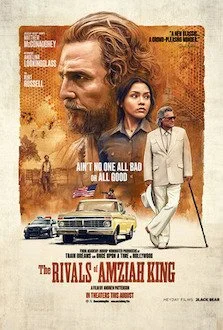
The Rivals of Amziah King (2026)

Direction: Andrew Patterson
Country: USA

American filmmaker Andrew Patterson did a much better job with his critically acclaimed alien-centered debut, The Vast of Night (2019), than with The Rivals of Amziah King, a revenge neo-western set in Oklahoma (the director’s home state) and centered on a devoted beekeeper and enthusiastic folk musician with a health condition. 

Matthew McConaughey plays the title character, supported by newcomer Angelina LookingGlass as his former foster daughter, who returns to town, and Kurt Russell as a powerful businessman. 

There’s rural dark poetry here, splashed with an indie touch, but it fails to impress, as the briskly edited first part of the film—its bluegrass swagger contributing little—proves to be a total snooze-fest. The second half is a tiny bit more exciting, but the story returns to bloated form, culminating in a cold, insipid manner.

Patterson uses the pseudonym James Montague to credited himself as writer and producer.

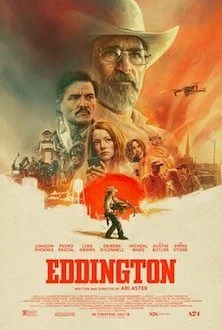
Eddington (2025)

Direction: Ari Aster
Country: USA

American writer-director Ari Aster ventures into new territory with Eddington, following two unforgettable entries in horror—Hereditary (2018) and Midsommar (2019)—and the far-fetched psychological black comedy—Beau is Afraid (2023). Eddington is a disturbing neo-western set in the fictional small town of Eddington, New Mexico, during the Covid era. Its bleakly comic vision of America’s violent culture unfolds through Joaquin Phoenix—in his second collaboration with Aster—who plays a lawless, asthmatic sheriff spiraling out of control after deciding to run for mayor. Emma Stone plays his moody, cult-bewitched wife, while Pedro Pascal portrays his progressive political rival.

The film is uneven, often veering into excessive satire, but it’s also sparked by occasional flashes of inventive twists. The plot takes on the form of a hallucinatory nightmare, saturated with sardonic humor and sharp social commentary—an uncomfortable, potent reminder that alienation is here to stay. Aster channels the spirit of the Coen brothers to portray a vortex of collective American madness. The viewer is submerged in a world of protests, lies, opportunism, manipulation, humiliation, conspiracies, obsession, crime, and cults. The pervasive restlessness and instability of the characters mirror today’s chaotic reality.

Unfortunately, the film loses steam and unravels after the madcap chase that marks its violent climax. Still, we forgive Aster, who, despite the narrative decline, delivers full-throttle filmmaking in what stands as his most overtly political work to date.